
Key Points
- Children with autism often experience difficulty interpreting facial expressions, gestures, and tone. Breaking social cues into simple steps makes learning more achievable and predictable.
- Evidence-based strategies like social stories, visual supports, role play, and video modelling create safe environments where children can practice social communication.
- Repeated practice across home, school, and community settings strengthens generalisation of social skills, increasing confidence, independence, and successful peer interactions.
Every child communicates in their own way, shaped by their environment, family culture, and personal strengths. For children with autism, understanding social cues can feel complex, especially when facial expressions, tone, or gestures do not always match what they expect. When families receive clear and supportive guidance, children begin to navigate social interactions with more comfort and clarity.
Teaching social cues becomes easier when it is broken down into simple, meaningful steps that match a child’s learning style. This article explores how families can introduce, model, and reinforce these skills in everyday moments.
Why Social Cues Are Challenging for Children with Autism

Understanding social cues can be difficult because many autistic children process information differently. Challenges may occur in reading facial expressions, interpreting gestures, understanding tone, or recognising implied expectations. Research also shows that autistic individuals may experience differences in social motivation, which can influence how rewarding or intuitive social interaction feels.
Many children on the spectrum do not automatically pick up social skills from observation alone. Studies highlight that social learning often requires explicit teaching rather than natural exposure.
These differences are not deficits. They reflect unique ways of interpreting the world. With structured instruction and supportive environments, children can gain the tools needed for clearer, more confident communication.
Key Principles for Teaching Social Cues
Teaching social cues is most effective when delivered in a structured, consistent, and concrete manner. Research emphasises several foundations for successful learning.
Core Principles
- Break social expectations into clear steps using simple language and predictable routines.
- Use visual aids, schedules, and examples to reduce uncertainty and support comprehension.
- Provide repeated practice in multiple environments, so children learn to generalise skills across settings.
These principles support the way many autistic children process information and promote confidence as skills progress.
Teaching Social Cues Through Social Stories
Social stories introduce social concepts in a calm, predictable way. They explain what a situation looks like, what cues may appear, and how the child can respond.
How Social Stories Help
- Break down complex interactions into manageable steps.
- Teach what different expressions or gestures might mean.
- Prepare children for common events like greetings, sharing, or asking for help.
- Reduce anxiety by showing what happens next in a social setting.
For example, a story might explain that when someone smiles and waves, it usually means they are being friendly, and the child can wave back or say hello.
Social stories work best when personalised with photos, drawings, or simple text that matches the child’s developmental level.
Role Playing and Using Simple Scripts
Role play offers a safe space to rehearse social skills before using them in real life. This practice can include greetings, turn-taking, expressing feelings, asking questions, or responding to common situations.
Benefits of Role Play
- Reduces social pressure by allowing practice without real-world consequences.
- Builds confidence through repetition.
- Helps children learn predictable sequences like starting, maintaining, and ending conversations.
- Encourages flexibility as children learn multiple ways to respond.
Studies show that role-playing and skill rehearsal improve social responsiveness and engagement for many autistic children.
Scripts can support children who benefit from structured communication. Over time, scripts can gradually fade as confidence and natural communication improve.
Video Modelling and Visual Supports for Social Learning
Many children with autism learn best through visual input. Video modelling uses short demonstrations of people displaying specific social behaviours, which children can watch and imitate.
Why Video Modelling Works
- Children can replay videos to reinforce learning.
- Videos provide consistent examples that reduce ambiguity.
- Research shows faster learning and better generalisation of skills compared to live modelling alone.
Additional helpful visuals include:
- Emotion charts
- Gesture cards
- Conversation flow diagrams
- Social cue flashcards
These tools help children match what they see with the meaning behind the cue. Visuals simplify abstract concepts and offer concrete references children can rely on.
Building Skills in Structured Peer Groups
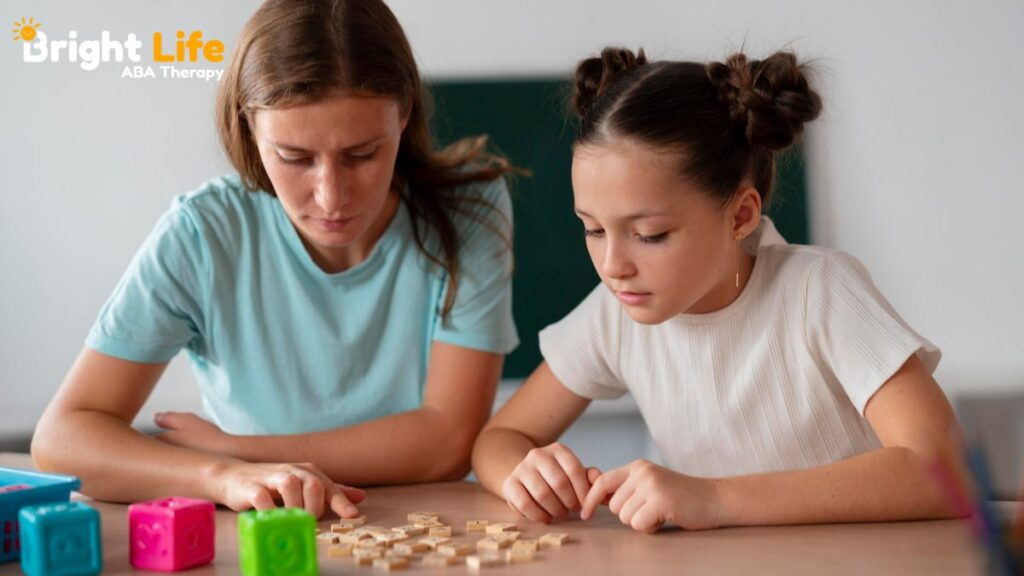
Organised social skills groups provide guided practice with peers. These settings offer predictable routines and structured activities that help children try new skills in real time.
Effective Group Features
- Clear social rules and expectations that children can learn and rehearse.
- Activities that require cooperation, turn-taking, or conversation.
- Adjusted instruction for different developmental or communication levels.
Research shows that children participating in peer-based social interventions often demonstrate improvements in eye contact, social initiation, and emotional understanding.
Strengthening Emotional Understanding and Empathy
Recognising facial expressions and understanding emotions are essential components of social cue interpretation. Some structured programs focus on teaching emotional awareness and perspective-taking. These programs have shown improvements in children’s emotional competence, peer interaction, and social problem-solving.
Areas to Support
- Identifying emotions in others.
- Understanding how actions affect others’ feelings.
- Learning how to respond with empathy.
- Building confidence in expressing personal emotions.
Helping children understand emotions goes beyond memorising expressions. It supports deeper, more meaningful communication skills.
How Parents and Caregivers Can Support Social Learning
Caregivers play a crucial role in helping children practice social cues in natural, everyday settings.
Practical Ways to Help
- Use routine moments for practice, such as greeting neighbours or ordering food.
- Offer praise and gentle reinforcement when the child makes attempts to use social skills.
- Create consistent visual supports at home, like cue cards, routine charts, or emotion boards.
- Encourage supported playtime with peers, both neurotypical and autistic.
- Model clear communication by narrating your own social cues or reactions.
- Start small with simple skills before progressing to complex situations.
Patience is key. Social learning takes time, and children benefit from predictable and encouraging practice.
Clearing Up Common Misconceptions About Social Skills Learning
A common misconception is that children will naturally learn social cues without direct teaching. Research strongly contradicts this. Many autistic children need explicit instruction for social skills to develop meaningfully.
Another misconception is that social skills training forces children to hide their natural behaviour. In reality, high-quality instruction supports understanding, not masking. Children are taught how to navigate social situations in ways that empower them to communicate effectively and make informed choices.
Everyday Practices That Support Social Growth

Daily interactions offer powerful opportunities for children to practice social understanding.
Helpful Everyday Strategies
- Incorporate social teaching into outings, such as shopping or visiting parks.
- Encourage participation in clubs, sports, or activities that match the child’s strengths.
- Use natural interactions to reinforce learning, such as thanking a cashier or making eye contact when saying hello.
- Allow children to communicate in their preferred ways, whether verbal, visual, or device-based.
- Focus on real connections rather than memorised responses.
These small, consistent experiences help children apply what they’ve learned in practical, meaningful ways.
Using Technology to Support Social Cue Learning
Technology offers new avenues for strengthening social communication. Interactive games, digital tools, and adaptive programs can present social scenarios in engaging ways. Many studies emphasise personalised content that matches the child’s abilities and interests.
Tools such as interactive stories, emotion identification apps, or video demonstration platforms can supplement real-world practice. They are not replacements for human interaction but serve as valuable support for learning and repetition.
Guiding Your Child Toward Confident Social Understanding
Children thrive socially when communication feels predictable and supportive. Learning social cues helps them feel more comfortable in conversations, friendships, and group settings. With thoughtful teaching, children gain the confidence to recognise emotions, respond appropriately, and build positive relationships.
Bright Life ABA provides structured guidance that transforms complex social skills into manageable and meaningful moments. Our team uses evidence-based strategies that fit each child’s strengths while helping families create supportive routines at home.
If you are looking for personalized ABA therapy that strengthens communication and social growth, we are here to help. Connect with Bright Life ABA to begin building your child’s confidence in understanding and responding to social cues.