
Key Points:
• Predictability helps children with autism feel safer, calmer, and more prepared for daily experiences.
• Consistent routines, visual supports, and transition strategies reduce stress and improve learning.
• Parents and caregivers can build predictability at home, school, and in the community with small, repeatable strategies.
Introduction
When a parent searches for information about predictability for children with autism, the goal is usually clear. They want to understand why their child becomes overwhelmed by changes, why transitions can trigger meltdowns, or why everyday tasks feel harder without preparation. Predictability often becomes the bridge between a child’s inner world and the expectations around them.
This article explores how predictability supports children with autism, why it matters in daily life, and what families can do to create consistent, manageable routines. It provides practical, non-generic strategies and insights drawn from what many caregivers experience daily.
Why Predictability Matters for Children with Autism
Predictability plays an important role in helping children understand what is happening, what will happen next, and what is expected of them. Many children with autism rely on structured environments because they reduce guesswork and sensory uncertainty.
When a child knows the sequence of events, the level of stress decreases. The child can step into a task, a room, or a situation with more confidence. Predictability also reduces the cognitive load required to navigate social interactions or transitions. For many families, even small changes can cause disruptions, so consistent routines become a stable foundation.
How Predictability Supports Emotional Regulation
Children with autism often experience the world in a heightened way. Sensory information, unexpected noises, or sudden changes can feel overwhelming. Predictability gives them the opportunity to prepare emotionally and physically.
With predictable routines, the child does not need to guess what is next, which helps them remain calmer. Emotional regulation improves because routines act as a guide, especially during difficult moments such as leaving the house, ending screen time, or starting homework.
The Link Between Predictability and Behavior
Many challenging behaviors stem from uncertainty. When a child does not understand the sequence of events, they may react with avoidance, resistance, or fear. Predictability reduces these responses by offering clarity.
Before highlighting specific strategies, it is important to understand behavior as communication. A predictable environment helps children communicate more effectively because they know what to expect and when to expect it.
Building Predictable Routines at Home
Home is often the first place where children experience structured routines. Predictability in this setting offers security and helps children move through daily expectations. A routine does not need to be complicated to be effective. What matters most is consistency and clear sequencing.
Many families find success by introducing routines slowly. Even simple morning and bedtime routines can set the tone for the day.
Helpful ways to make home routines more predictable:
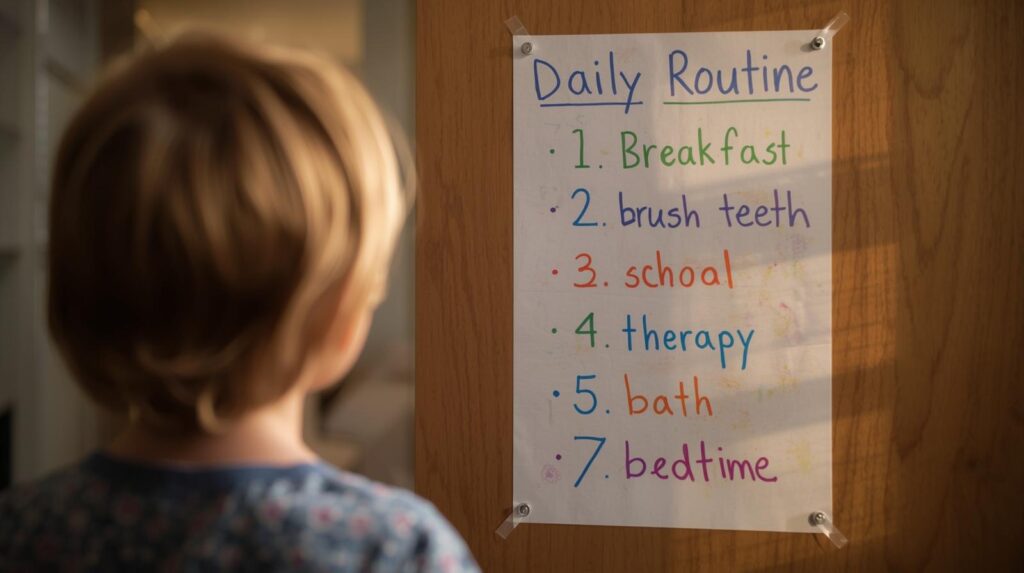
• Use a visual schedule that shows the order of tasks such as waking up, brushing teeth, eating breakfast, and getting dressed.
• Keep essential items such as toothbrushes, school bags, or utensils in the same place each day.
• Introduce brief verbal previews like “After dinner, we will take a bath” to prepare for the next step.
• Use timers to signal the beginning and end of activities to reduce surprise transitions.
Predictability in Transitions
Transitions can be one of the most challenging parts of the day for children with autism. Moving from one activity to another requires switching attention, adjusting expectations, and often dealing with sensory differences in the new environment.
Predictability helps by offering cues that a transition is coming and reducing the suddenness of the shift. When transitions are prepared and structured, children are more likely to participate without distress.
Strategies to support predictable transitions:
• Provide countdowns using timers to show when the next activity will begin.
• Use transition objects such as a favorite toy or item that the child can carry between locations.
• Create visual or verbal cues that signal the end of one activity, such as a specific phrase or picture card.
• Give clear, short reminders to reduce anxiety.
Predictability and Sensory Needs
Sensory differences often influence how predictable an environment feels. Loud noises, bright lights, or crowded rooms can create sensory unpredictability that affects the child’s comfort.
Parents can support predictability by identifying triggers and preparing in advance. Reducing unexpected sensory experiences helps the child stay regulated and increases their confidence in daily activities.
Some families use sensory checklists, quiet corners, or planned sensory breaks. These help children retreat, reset, and return to tasks with more stability.
Visual Supports That Increase Predictability
Visual supports are one of the most effective tools for building predictability. They give children a concrete representation of what will happen and what is expected.
Visual schedules, timers, first-then boards, and chore charts can all increase a child’s understanding. Because visuals remain constant, they remove the confusion that can arise from verbal instructions alone.
Visual supports also help children become more independent. Over time, many begin to refer to the visuals without prompts, which makes routines smoother for both the child and the caregiver.
Predictability in School and Community Settings
Outside the home, predictability helps children navigate new environments such as classrooms, playgrounds, stores, and appointments. These settings often involve more variables and unexpected changes.
Parents can work with teachers, therapists, and community members to create a predictable experience. Even small adjustments can make these environments more manageable.
Examples include sending visual schedules to school, arranging preview visits to new locations, or informing the child about upcoming events such as fire drills, substitute teachers, or class changes.
How Predictability Supports Learning
Children with autism learn more effectively when they feel secure. Predictability in the learning environment allows them to focus on content rather than worrying about surprises.
Clear expectations, consistent teaching routines, and structured activities help the child prepare mentally. Predictability also improves engagement because the child knows what will happen next and how long the activity will last.
Teachers often use predictable routines for reading time, math activities, or small-group sessions. When these patterns remain steady, children develop confidence and can participate with fewer interruptions.
Supporting Predictability During Family Outings
Outings are often unpredictable, which can create stress. Families can prepare by offering previews and building familiarity with the destination. Predictability during outings does not mean rigid control, but thoughtful preparation that allows the child to anticipate the experience.
Using maps, social stories, or videos of the location can make the outing more predictable. Some families also bring sensory tools or comfort items to reduce overwhelm.
Keeping Predictability Flexible
Predictability does not mean parents must eliminate all spontaneity. Instead, it gives children a stable base so they can handle gradual changes. A flexible routine teaches that small changes can be tolerated when the overall structure remains familiar.
Parents can introduce small variations in controlled ways. Over time, this helps children adjust to new experiences while still feeling supported.
Encouraging Independence Through Predictability
Predictable routines help children build independence because they learn the rhythm of everyday tasks. When the child knows what comes next, they can complete steps on their own.
Young children might start with simple tasks such as putting toys away after playtime. Older children might take on more complex routines such as packing their school bags or managing a bedtime sequence. Predictability gives them the confidence to try new responsibilities.

When Predictability Breaks Down
Even well-structured days can become unpredictable. Appointments change, plans shift, and unexpected events happen. Preparing the child for these moments is as important as building consistency.
Parents can use techniques such as giving alternative choices, providing early warnings, or using visual reminders of schedule changes. A calm explanation and reassurance often help the child cope with the unexpected.
Final Thought: Bringing Comfort Through Structure
Predictability offers children with autism something essential: a sense of control in a world that can feel overwhelming. It supports emotional regulation, reduces behavioral challenges, and improves learning and independence. Families who invest in creating predictable routines often see their child grow more confident and more willing to participate in daily activities.
Predictability does not remove challenges, but it creates a more manageable path forward. With thoughtful routines, visual supports, and consistent transitions, children can navigate their days with greater comfort and clarity.
If you are looking for guidance in building routines and supporting predictability, ABA therapy can help your child develop meaningful skills in a structured, supportive way. Bright Life ABA offers ABA therapy in Indiana and ABA therapy in Maryland, providing services that help children build confidence through routine, practice, and positive reinforcement. With support from Bright Life ABA, your child can learn to navigate daily life with more comfort and independence. Reach out to get started and discover how predictable, consistent support can make a meaningful difference.