Key Points:
• Many individuals with autism struggle to perceive subtle nonverbal cues (facial expressions, tone, gestures), leading to miscommunication
• These “missed social cues” appear in everyday contexts, conversations, humor, turn-taking, causing frustration and social isolation
• Teaching recognition and response to social cues (through role play, video modeling, social stories, peer mentorship) can help bridge the gap
• Awareness of masking, social motivation, and individual differences is crucial when supporting someone with autism
• ABA-based strategies offer structured, evidence-informed methods to improve social cue understanding over time
It’s common for parents, educators, or siblings to think: “Why didn’t they understand that I was upset even though I didn’t say it?” Or: “They didn’t catch the sarcasm, and now the room is awkward.” These are moments of social cue breakdown, and they can be especially frequent when a person has autism.
Understanding autism social cues examples is more than theory. It’s about seeing how these breakdowns play out in daily life, and learning precise ways to help someone bridge that gap.
Below, you’ll find a detailed look at the types of cues often missed, real-life examples, reasons behind the difficulty, and actionable strategies. By the end, you’ll know where to focus attention and how to support growth.
What Do We Mean by “Social Cues”?
Before going into autism social cues examples, it helps to define what social cues are. These are signals (often nonverbal, sometimes subtle) that people use to communicate feelings, intentions, or rules about interaction.
Some classes of social cues include:
- Facial expressions / microexpressions (smiling, frowning, raised eyebrows)
- Tone of voice / prosody (inflection, sarcasm, warmth, urgency)
- Body language, posture, gestures (leaning forward, crossed arms, shrug)
- Proxemics / personal space (how close or far one stands)
- Timing & turn-taking cues (pauses, gaze shifts indicating your turn)
- Contextual rules / social norms (when to interrupt, how formal to speak)
When someone with autism misses or misinterprets one of these, communication can go off-track.
Why Social Cues Are More Challenging for Many with Autism
Understanding why these cues are hard to pick up helps us tailor support. Some key explanations:
- Reduced spontaneous attention to faces or cues. Some autistic individuals naturally avoid or scan faces less, missing the visual information in expressions or gestures.
- Overload or discomfort with social stimuli. Making eye contact or processing rapid social change may trigger sensory or emotional discomfort.
- Different social motivation. The “social motivation theory” suggests some autistic people derive less intrinsic reward from social stimuli, so cues that others find salient may feel less compelling.
- Masking or compensatory strategies. Some teach themselves patterns or scripts and compensate, but that doesn’t always equate to internal, flexible cue reading.)
- Variability: autism is a spectrum. Some may struggle deeply with social cues; others may perform near neurotypical levels but still miss nuance (sarcasm, double meanings).
With that in mind, here are autism social cues examples, real scenarios where cues are missed, and what they look like in practice.
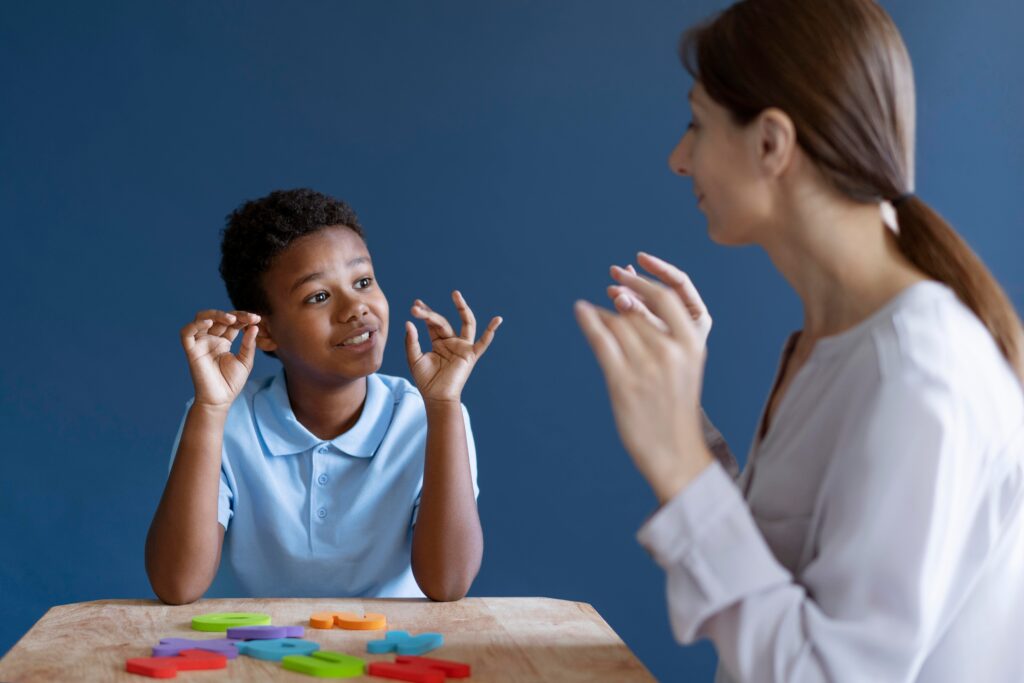
Examples of Social Cues Missed (and Consequences)
1. Facial Expressions & Microexpressions
Example scenario: A friend frowns slightly while listening. A neurotypical peer might stop, ask “What’s wrong?” But a child with autism may not notice the frown and continue talking obliviously.
Common misses:
- Difficulty distinguishing between a genuine smile vs. a polite smile
- Missing brief eyebrow raises of surprise or skepticism
- Misreading neutral faces as positive
Impact: The person on the other side might feel ignored, misunderstood, or belittled, even when the intent was friendly.
2. Tone of Voice, Sarcasm & Prosody
Example scenario: Someone says, “Nice job…” after you spill something, in a flat, ironic tone. A non-autistic listener understands the sarcasm. Someone with autism might take it literally (“Thank you!”) or be confused about the sentiment.
Common misses:
- Detecting sarcasm, irony, or exaggeration
- Picking up on urgency, disappointment, or irritation in tone
- Distinguishing between a playful tone versus serious tone
Impact: This can lead to misunderstandings, appearing rude or naïve, or being hurt because the person felt mocked.
3. Gestures, Body Language & Posture
Example scenario: A classmate shrugs and glances away, indicating “I’m done talking.” The individual with autism keeps pressing the topic, not seeing the cue.
Common misses:
- Not recognizing crossed arms as discomfort
- Missing leaning away / turning the body as a cue to disengage
- Ignoring pointing or hand gestures meant to guide attention
Impact: Others may view them as pushy or insensitive. The flow of interaction stalls.
4. Personal Space & Proxemics
Example scenario: The person with autism stands too close when speaking, not noticing the peer edging back. Or they may stand too far, giving a cold vibe.
Common misses:
- Recognizing when someone wants more distance
- Adjusting closeness based on setting (classroom, hallway, bus)
- Not picking up on edge cues (foot shifts, body shifting)
Impact: Others feel uncomfortable and may withdraw or avoid further interaction.
5. Timing & Conversational Turn-Taking
Example scenario: During group discussion, someone pauses to let others speak. The person with autism doesn’t notice and either interrupts or stays silent too long—missing the window.
Common misses:
- Recognizing the cue (pause, glance) that it’s your turn
- Knowing when to end one’s turn
- Not sensing shifts in topic or when someone else is ready to speak
Impact: Conversations feel disjointed, with interruptions or awkward pauses.
6. Humor, Metaphor & Indirect Language
Example scenario: Someone says, “Break a leg!” meaning “Good luck.” A literal thinking mind may respond in shock or confusion.
Common misses:
- Interpreting idioms, metaphors, jokes, sarcasm
- Recognizing implied meaning (reading between lines)
- Matching indirect hints (e.g. “It’s cold in here” meaning “Close the window”)
Impact: Interactions may appear overly literal, rigid, or socially awkward.
7. Social Context / Unspoken Rules
Example scenario: In a classroom, the teacher begins wrapping up. Others start packing. The person with autism continues chatting, not picking cues.
Common misses:
- Recognizing contextual signals (the meeting ending, group transitioning)
- Adapting formality / register depending on setting
- Understanding unwritten social expectations
Impact: The person may repeatedly violate etiquette (e.g. staying too long, interrupting, ignoring cues of closure).
How Families & Educators Can Help: Strategies & Supports
The key is not to “force” perfect reading of cues but to scaffold understanding with explicit teaching, practice, and supportive feedback. Below are concrete, evidence-aligned methods.
1. Role-playing & Modeling
Use scripted or semi-scripted scenarios (greeting, making a request, turn-taking). Adults or peers model correct cue usage, then the autistic person practices.
Break the scenario into pieces (e.g. first observe facial expression, then gesture, then tone) and progressively combine.
2. Video Modeling / Video Self-Modeling
Show recorded videos of people interacting, paused at cue moments. Ask: “What did that gesture mean? What about their tone?” The student then imitates response.
Video self-modeling (showing the person successfully using a social cue) can also boost confidence and internalization.
3. Social Stories & Narratives
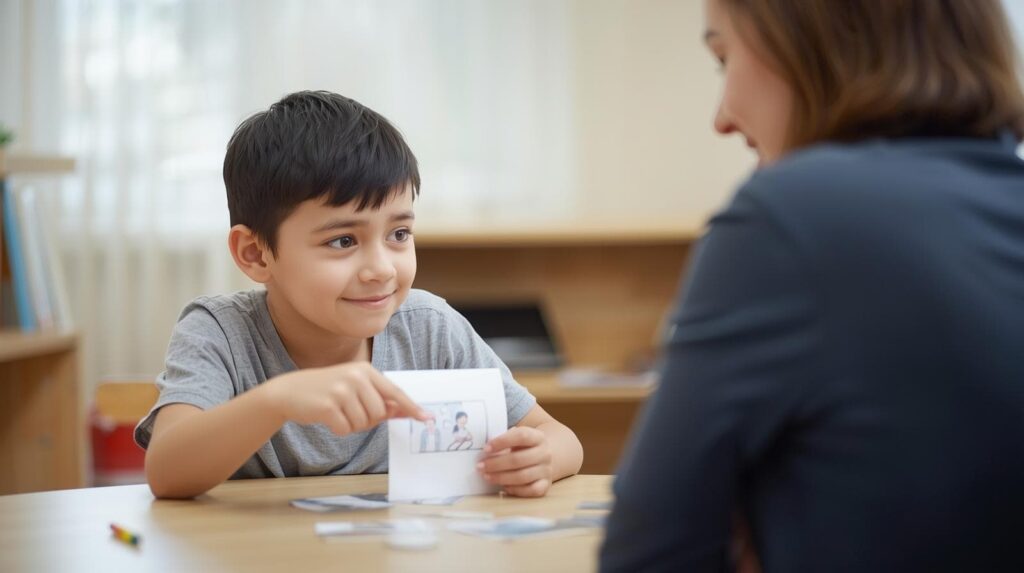
Write short stories with pictures describing a social situation and the cues plus expected responses. These stories make implicit rules explicit.
Example: “When I see my friend’s arms crossed and eyes down, it might mean they want space. I can pause and ask, ‘Do you want a break?’”
4. Explicit Teaching & Prompting
Teach the meaning of gestures, tones, expressions overtly (e.g. flashcards, emotion wheels). Use gradual prompt fading so the learner becomes independent.
Prompting hierarchy: full prompt → partial cue → no cue.
5. Peer-mediated Training
Train peers and classmates to provide cues or gentle feedback in natural contexts (e.g. “They look bored; ask a question.”) Peer models can create more natural settings.
6. Naturalistic Practice & Generalization
Do not limit lessons to therapy rooms. Use cafeteria, playground, home settings. Practice real conversations, not just drills.
Schedule “cue hunts”: pick one type of cue to notice in movies, cartoons, or in daily life.
7. Reinforcement, Feedback & Reflection
After an interaction, debrief. Ask: “Which cues did you notice? Did anything surprise you?” Use positive reinforcement for correct noticing or asking clarifying questions.
8. Adjust Expectations & Allow Compensation
Some individuals will never catch every nuance, and that’s okay. Help them develop compensatory strategies (e.g. asking clarifying questions: “Do you mean that as a joke?”) or use “signal checking”: “I heard your tone sounded upset; is that what you meant?”
Recognize and accommodate masking strain. Give breaks, support emotional regulation.
Challenges & Caveats to Keep in Mind
- Individual differences: What one person misses, another may do well. Tailor instruction.
- Overteaching fatigue: Cue hunting all the time can feel mechanical or exhausting, keep it conversational and varied.
- Masking pressure: Some autistic people learn to fake social cues; continuously doing so may lead to burnout or stress.
- Double empathy problem: Misunderstandings are two-way. Support neurotypical peers to understand the autistic person, not just vice versa.
- Cultural differences: Social cues vary across cultures (personal space, eye contact norms). Always localize teaching.
Putting It All Together: A Practical Plan
- Assessment & baseline: Identify which types of cues your child or student misses most (facial, tone, gesture).
- Prioritize: Begin with the cues most relevant to daily life (e.g. tone + facial expression)
- Create a learning sequence: instruction → modeling → guided practice → independent use → generalization
- Embed in routine: morning greetings, lunch, chores, family gatherings
- Track progress: keep a log of “missed cue incidents” and growth over time
- Involve peers and siblings: train them gently on how to cue or scaffold
- Review & adjust: revisit strategies every few months and tweak
Over time, the gap between “hidden social signals” and understanding can narrow.
Summary
Missing social cues is a common and consequential challenge for many autistic individuals. These may include difficulties with facial expressions, tone of voice, gestures, turn-taking, humor, and context rules. These “autism social cues examples” show how misunderstanding plays out daily – interruptions, confusion, social friction.
But missing cues does not mean lack of intelligence or intent. With explicit teaching, role-play, video modeling, social stories, peer support, and reflection, many people with autism can improve their recognition and response to social cues. Success doesn’t mean perfection; just more connection, fewer missteps, and more confidence in social settings.
Take a Step Forward: Explore ABA Therapy for Social Skills
Begin the journey toward stronger social understanding. By integrating Applied Behavior Analysis (ABA) strategies, an experienced team can help break down social cues into teachable steps and support generalization across settings. If you’re in Indiana or Maryland, Bright Life ABA offers ABA therapy in your region. Reach out to explore how our service at Bright Life ABA can help your child or loved one grow in social confidence and connection.