
Key Points:
- Children with autism often experience emotions deeply but may struggle to identify or express them.
- Practical strategies like visual aids, emotion-based games, and ABA techniques help build emotional understanding.
- With guidance and consistent practice, children with autism can learn to navigate and share their feelings more effectively.
Every parent wants their child to feel understood, loved, and capable of expressing themselves. For children with autism, recognizing and expressing emotions can be challenging, not because they lack feelings, but because the process of identifying and communicating those emotions may look different.
Autism and emotions are deeply connected. While neurotypical children often pick up on emotional cues naturally, many children with autism need intentional support to interpret facial expressions, tone of voice, and body language. This can make social interactions confusing and frustrating.
Understanding how autism affects emotional recognition is the first step toward helping children manage and express their inner world.
Why Identifying Emotions Is Difficult for Children with Autism
Children on the autism spectrum may find emotions confusing for several reasons. One reason is difficulty interpreting nonverbal cues, such as facial expressions and gestures. What looks like a “happy face” or “angry face” to most people might not automatically make sense to a child with autism.
Additionally, sensory sensitivities can influence emotional regulation. Overstimulation from noise, lights, or textures might lead to emotional responses that seem sudden or intense. Language delays can also make it harder for a child to describe what they feel, leading to frustration or behavioral challenges.
Children with autism often score lower in recognizing emotions compared to their neurotypical peers. However, this doesn’t mean they lack emotional depth. It simply means they need targeted teaching to build those skills.

The Emotional Strengths of a Child with Autism
It’s important to remember that children with autism have unique emotional strengths. Many are deeply empathetic once they understand how someone feels. They might show affection in unconventional ways, through acts of service, sharing interests, or simply wanting to be near someone they trust.
Their emotions may not always appear “typical,” but they are genuine and strong. Recognizing these emotional strengths of a child with autism helps caregivers appreciate their perspective and build emotional awareness from a place of respect and understanding.
Adaptation in ABA: Building Emotional Awareness
Adaptation in ABA (Applied Behavior Analysis) plays a key role in teaching children with autism how to identify and express emotions. ABA therapy adapts strategies to meet the child’s individual needs, whether through visual supports, role-play, or structured reinforcement systems.
A behavior analyst might start with simple steps, such as matching pictures of “happy” or “sad” faces, and gradually move to identifying those emotions in real-life situations. This incremental learning helps the child adapt without becoming overwhelmed.
Adaptation in ABA also means recognizing when a child is ready to move from recognizing basic emotions to expressing them verbally or nonverbally. Consistent reinforcement, praise, tokens, or preferred activities, encourages progress and builds confidence.
Teaching Emotion Recognition: Step-by-Step
Helping children with autism recognize emotions involves breaking down the process into manageable parts. Here’s how parents and caregivers can begin:
- Start with visual aids: Emotion faces for autism, like flashcards or emoji charts, help children associate expressions with feelings. Begin with basic emotions such as happy, sad, angry, and surprised.
- Model emotions daily: Label your own feelings throughout the day. For example, say, “I’m happy we’re playing together,” or “I feel sad when it rains.”
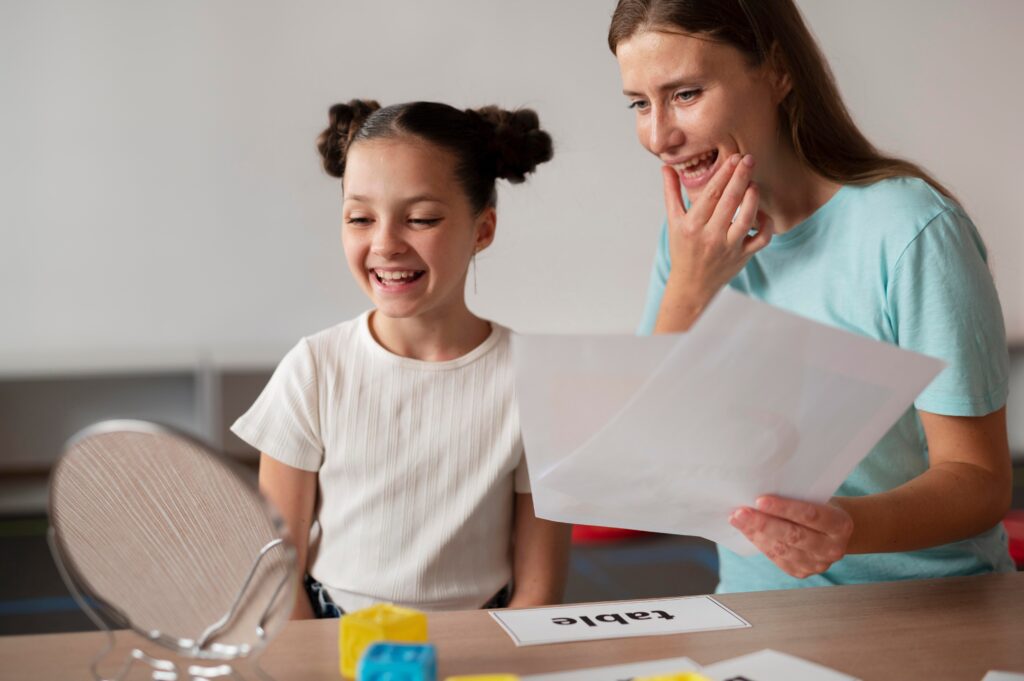
- Use mirrors: Encourage your child to look at their reflection and mimic different facial expressions. This strengthens facial-emotion connection.
- Incorporate media: Watch short video clips or shows and pause to ask, “How do you think this person feels?”
- Engage in autism emotions activities: Games like emotion bingo or matching emotions to scenarios make learning fun and interactive.
Consistency and patience are key. The goal isn’t perfection. It’s progress in understanding emotions in a way that feels safe and rewarding.
Helping Children Express Their Emotions
Recognizing emotions is only half the journey; expressing them appropriately is the next step. Many children with autism find it easier to express emotions through alternative communication methods rather than words alone.
Here are practical ways to support expression:
- Visual communication tools: Use charts or communication boards where the child can point to pictures that represent how they feel.
- Emotion thermometers: These visual scales help children show intensity levels of emotions, from calm to very upset.
- Journaling or drawing: Older children may prefer expressing emotions through art or writing, offering insight into their internal experiences.
- Social stories: Custom stories that illustrate emotional situations can help children learn what to do when they feel certain ways.
This process not only reduces frustration but also strengthens the child’s ability to self-regulate and connect with others.
Encouraging Emotional Regulation Through ABA
ABA therapy provides structured methods for teaching emotional regulation. When a child learns to identify early signs of emotional distress, they can use strategies, such as deep breathing, sensory breaks, or asking for help, to calm down before emotions escalate.
For example, during a therapy session, a child might learn to recognize when they are becoming frustrated. The therapist would guide them to use coping strategies like squeezing a stress ball or requesting a short break. Over time, these learned responses replace meltdowns or avoidance behaviors.
This structured teaching makes emotions less overwhelming and more manageable. ABA focuses on reinforcing positive communication rather than punishing emotional expression, helping children feel safe to share how they feel.
Common Misconception: Do Autistic People Have Emotions?
A common misconception is that autistic people lack emotions. This is not true. Children and adults with autism experience a full range of emotions – joy, sadness, fear, love, and empathy, but may express them differently.
The challenge often lies in interpreting and communicating emotions, not in feeling them. By providing structured learning and emotional modeling, caregivers can help bridge this communication gap and nurture authentic emotional expression.
Creating Emotional Learning Opportunities at Home
Parents and caregivers play a powerful role in supporting emotional growth. Everyday moments can become opportunities for teaching.
Here are a few simple, effective strategies:
- Name emotions in real time: When something happens, like a dropped toy, gently label the emotion: “That made you feel frustrated.”
- Practice problem-solving: Talk about what can be done when certain feelings arise, such as asking for help or taking a break.
- Reinforce positive expressions: When your child shares how they feel, praise their effort, even if the words or expressions aren’t perfect.
- Keep routines predictable: Predictability reduces anxiety, helping children manage emotions more effectively.
These consistent practices make emotional learning a natural part of daily life.
When to Seek Professional Support
If your child frequently becomes overwhelmed, struggles to identify emotions, or has difficulty calming down, professional guidance can help. ABA therapists, speech therapists, and occupational therapists often collaborate to create a comprehensive emotional development plan.
A trained ABA therapist can observe behavior patterns and design personalized interventions to strengthen both emotional recognition and expression. Early support is often key to long-term success.
A Heartfelt Takeaway
Helping a child with autism recognize and express emotions takes time, consistency, and compassion. Progress may come in small steps – a new facial expression recognized, a feeling labeled, a moment of calm after frustration, but each step is meaningful.
Children with autism are capable of rich emotional lives. With patient guidance, tailored ABA strategies, and supportive environments, they can learn to navigate and share their feelings in ways that enhance connection and confidence.
At Bright Life ABA, we understand how important emotional development is for your child’s overall growth. Our ABA therapy in Indiana and Maryland helps children with autism learn to recognize, understand, and express emotions using personalized strategies that meet them where they are.
If you’re ready to help your child strengthen emotional understanding and communication skills, our team at Bright Life ABA is here to guide you. Let’s work together to help your child thrive, one emotion at a time. Get in touch with us today!