
Key Points
- Structured routines and frequent scheduled bathroom visits help autistic children learn toileting more rapidly and consistently.
- Positive reinforcement and visual support, rather than punishment, boost motivation and build independent toilet use in children with ASD.
- Addressing sensory concerns, communication barriers, and building body awareness accelerates success in toilet training for autistic children.
Toilet training a child with autism can feel challenging, intimidating, and fraught with setbacks. But with carefully applied behavioural strategies grounded in ABA, many children with autism learn to use the toilet independently, and often more quickly than expected.
ABA offers structured, evidence-based methods that break toilet training into manageable steps while honoring each child’s needs. This article guides families through practical approaches that reduce stress and encourage steady progress.
Why Toilet Training Often Presents Unique Challenges for Children with Autism
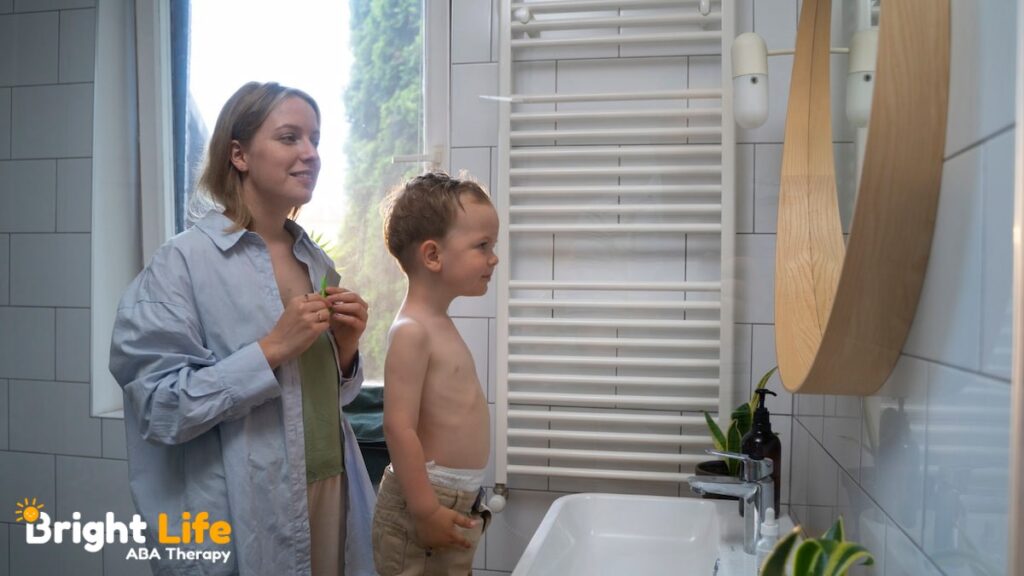
Autistic children may face a set of obstacles that make toilet training harder than for neurotypical children. Recognising these from the start helps tailor a more effective approach.
Developmental and Communication Barriers
Many children with autism have difficulties with communication and understanding abstract instructions. They may not clearly recognise or communicate when they need to use the toilet. Some may struggle with transitioning from diaper to toilet use or may not understand instructions like “go potty now” in the way a neurotypical child might.
Because traditional social rewards, like praise or a parent’s verbal approval, may not motivate them, toilet training often requires alternative motivators and more explicit behavioural structures.
Sensory Processing & Body Awareness Issues
Many autistic children have sensory sensitivities that make the typical bathroom environment uncomfortable. Cold tile floors, the sound of flushing toilets, or unfamiliar toileting routines can be distressing.
Additionally, some autistic children have difficulty recognising internal signals (thirst, hunger, need to pee or poop), a trait sometimes linked to differences in interoception. This can make it hard for them to “feel” when their body needs the toilet.
Irregular Toileting Cues & Infrequent Opportunities
Because children on the autism spectrum may have fewer and less predictable toileting cues, there are fewer natural opportunities to practice toilet use. This makes it harder to learn by repetition alone.
Thus, toilet training for autistic children often needs a more planned, consistent approach, especially compared with neurotypical children.
Foundational Principles for ABA-Based Toilet Training
Schedule Regular Bathroom Visits
Regular, scheduled trips to the bathroom create predictable opportunities for success.
- Use timed intervals throughout the day (for example, every 1–2 hours), or schedule after events like meals or naps when bathroom use is more likely.
- Avoid relying solely on “wait until the child says they need to go.” Many children with autism may not sense or communicate the need reliably.
- Consistency helps build awareness that toileting is a normal part of the daily routine, not a one-off or optional activity.
Use Positive Reinforcement Right Away
Rewarding success, no matter how small, helps cement the association between toileting and positive outcomes.
- Provide immediate praise or tangible rewards as soon as the child uses the toilet correctly. Delays in reinforcement reduce effectiveness.
- Use a reward system that is meaningful to the child, favourite toy, extra screen time, or a preferred activity. Make sure the reward is reserved only for successful toileting behaviour to maintain its value.
- If the child is nonverbal or has limited language comprehension, pair verbal praise with visual supports or picture cues to reinforce the link between behaviour and reward.
Introduce Underwear Early, Remove Diapers During Training
Diapers and pull-ups often mask accidents. Moving to underwear helps the child feel discomfort if they wet themselves, which in turn increases motivation to use the toilet.
Wearing underwear helps children associate wetness with discomfort. This tactile feedback can be a powerful motivator for independent toileting.
Structuring the Training Process
Prepare the Bathroom Environment to Be Sensory-Friendly
Design a bathroom routine that considers and reduces sensory barriers.
- Ensure the toilet seat is comfortable. If needed, use padded seats or adaptive equipment.
- Reduce sensory triggers: avoid loud flushing, harsh lighting, strong cleaning smells, or slippery/cold floors. Provide simple comforts, soft slippers, calm lighting, toys or books if it helps the child remain calm.
- Use visual supports, such as picture schedules or a “First-Then” board, to clarify the steps involved: going to the toilet, using it, wiping, flushing, and washing hands. This helps children who have difficulty processing verbal instructions.
Start with Sitting Practice Without Pressure
Initially, the goal is not necessarily to produce urine or stool, but to help the child get used to regularly sitting on a toilet.
- Encourage sitting on the toilet (or potty seat) for a few minutes several times a day, even if nothing happens. Build up from a few minutes to ten or fifteen minutes gradually.
- Use a calm, patient tone, and ensure the activity feels predictable rather than stressful. Use a visual routine or “toilet time” schedule to help the child understand what is happening.
- Reward sitting time itself initially, and only later start rewarding actual urination or bowel movements. This helps build comfort and reduces negative associations.
Combine Prompting, Reinforcement and Gradual Fading
Apply prompting (verbal, visual, or physical), then fade prompts gradually as the child gains competence, always reinforcing independent use.
- Use clear, simple, consistent prompts and pair them with visual cues. For example: show a picture of a toilet, say “time to potty,” then guide the child to the bathroom.
- Once the child regularly uses the toilet when prompted, begin teaching initiation: encourage them to alert you when they need to go (e.g., via a picture card, pointing, or a communication device for nonverbal children).
- Gradually reduce the frequency of prompts and increase self-initiated visits, while continuing reinforcement for success. This helps build independence in a structured, supportive way.
Addressing Specific Challenges
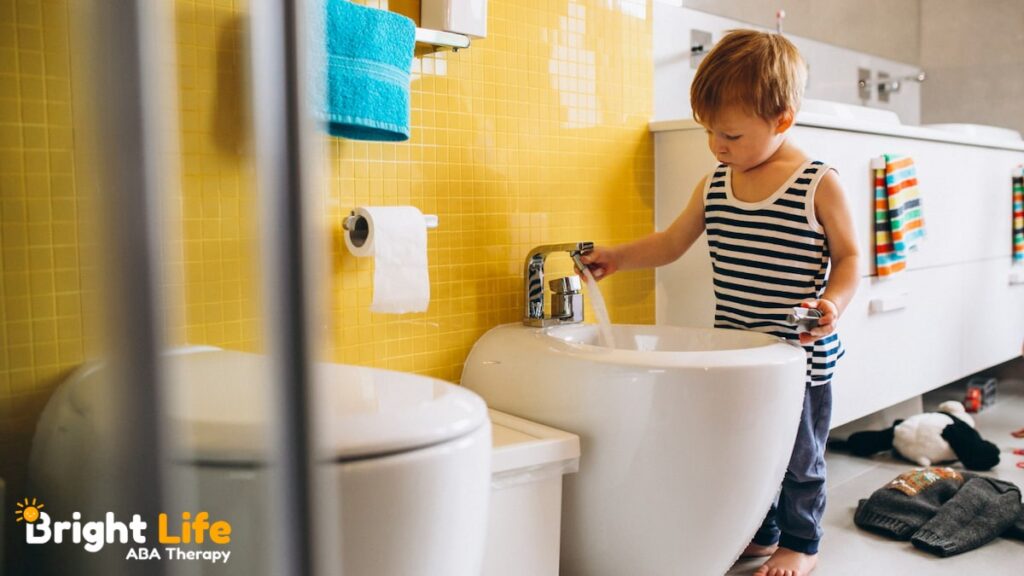
Managing Resistance and Accidents Calmly
Accidents and resistance are a regular part of learning. Reacting harshly can create anxiety and setbacks.
- Avoid punishment, shaming, or overly harsh reactions after accidents. Instead, respond calmly and reset the routine.
- Provide a brief reminder that next time they should try to use the toilet, then clean up quietly. Don’t draw out the incident or make it emotionally charged.
- Continue frequent scheduled attempts. Consistency over time is often what leads to success, not immediate perfection.
Supporting Non-Verbal Children or Those with Limited Language
For children who cannot yet speak or have limited comprehension, visual and behavioural support are essential.
- Use picture cards, visual schedules, or a “First-Then” board (e.g., “First go potty, then get a treat”) to communicate expectations clearly.
- If the child uses a communication device or assistive technology, incorporate toileting icons (e.g. a toilet picture) to allow them to signal need independently.
- Recognise non-verbal cues. Some children may show discomfort, request routines, or exhibit behaviour signals rather than using words. Accept those behaviours and respond consistently.
Incorporating Toilet Training into a Larger ABA Program
Toilet training need not be isolated. When combined with other ABA-based interventions, success tends to be stronger and more enduring.
- Intensive toilet-training protocols rooted in ABA (similar to those used in institutional or educational settings) have proven effective, even for children who previously failed toilet training at home.
- Parent-mediated training approaches can work, including in-home settings, as long as consistency, reinforcement, and clear structure are maintained.
- Adapting an ABA toilet-training package for your child may require flexibility. Not every child responds the same way; tailoring components, schedule frequency, visual supports, and reinforcement types is key to success.
Practical Step-by-Step Plan for Parents & Caregivers
Here’s a sample plan combining the strategies above. Use it as a flexible template, adapting as needed based on your child’s responses.
- Day 1–3: Remove diapers during waking hours, introduce underwear. Begin regular scheduled toilet sits (every 60–90 minutes). Provide visual cues (toilet picture), simple instructions, guide the child to the toilet, sit for 2–5 minutes, even if nothing happens. Reinforce with a small reward for just sitting.
- Day 4–7: Continue scheduled sits. Gradually increase sitting time to 5–10 minutes. Reward any small successful urinary void (even a dribble). Introduce a “First-Then” visual chart linking toileting to a reward.
- Week 2 onward: Continue frequent sits post-meals or after drinks. Begin fade prompts as the child shows signs of needing the toilet (body cues, restlessness, genital holding, etc.). Encourage pointing to or signalling with a picture when they need to go.
- Ongoing: Maintain consistency across caregivers and settings (home, daycare, school). Use sensory-friendly bathroom adjustments (a comfortable seat, soft lighting, and minimal flushing noise, if possible). Celebrate successes and remain calm in the face of accidents.
Why These ABA Strategies Often Work Better Than Traditional Approaches

Many typical potty-training methods assume that children understand internal cues, language, and social praise, and that they can generalise easily. For autistic children, those assumptions often do not hold.
ABA-based toilet training:
- Relies on observable behaviours, not assumed inner awareness. It builds toileting as a learned, repeatable routine rather than expecting spontaneous readiness.
- Uses reinforcement that is meaningful to the child, not just social praise, but tangible rewards and clear structure.
- Integrates visual supports, schedules, and sensory adjustments to address common autism-related barriers to toileting.
- Offers flexibility to adapt to individual learning pace; training can be faster or slower depending on the child’s responsiveness, with consistent follow-up and adjustments.
Research supports this. In one study, three children with autism reduced urination accidents to zero and began spontaneously requesting the bathroom within 7–11 days of training. Another school-based program reported all five children with autism or developmental delays acquired independent toileting via ABA-structured interventions. Parent-mediated ABA toileting interventions at home have also shown lasting success even after many months, with abilities maintained years later.
Supporting Independence Begins With the Right Approach
Successful toilet training is not about rushing milestones. It is about creating a calm, supportive environment where your child feels safe to learn. When strategies match a child’s sensory needs and routine, the process becomes smoother and more encouraging for both parents and children.
At Bright Life ABA, we help families navigate toilet training using clear, individualised steps rooted in evidence-based practice. Our therapists work closely with parents to create routines that build confidence and independence.
If you are searching for compassionate support and strategies that truly work, we are ready to help. Contact us to begin your child’s journey toward successful toilet training.